Prebiotics for Gut Health: 15 Kitchen Foods That Feed Your Microbiome
Your gut is home to trillions of bacteria, and what you feed them matters more than you might think. Prebiotics for gut health are the special fibers your body cannot digest, but your beneficial gut bacteria absolutely love. Therefore, feeding your microbiome the right foods can improve digestion, boost immunity, and even lift your mood. Fortunately, you do not need expensive supplements to get started. Instead, some of the most powerful prebiotics for gut health are already sitting in your kitchen right now.
In this guide, we will explore 15 everyday foods packed with prebiotic fibers. Additionally, you will learn exactly how each one supports your gut and simple ways to add them to your meals.
What Are Prebiotics for Gut Health?
Prebiotics are non-digestible carbohydrates, usually fibers, that act as fuel for beneficial gut bacteria. Once these fibers reach your large intestine, your microbiome ferments them and produces short-chain fatty acids. Consequently, these compounds help maintain your gut lining, reduce inflammation, and support overall wellness. However, prebiotics are different from probiotics. While probiotics add live bacteria to your gut, prebiotics feed the good bacteria already living there. Because of this, combining both creates the most powerful gut-supporting effect.
According to research analyzing over 8,000 foods, about 37% of common foods contain prebiotics. Moreover, some of the richest sources are surprisingly ordinary kitchen staples.
The Science Behind Prebiotics for Gut Health
Scientists have identified several key types of prebiotic fibers. Inulin and fructooligosaccharides (FOS) are among the most studied. Furthermore, resistant starch and beta-glucan also feed beneficial bacteria effectively. When you consume these fibers regularly, studies show they increase populations of Bifidobacterium and other friendly microbes. As a result, your gut produces more butyrate, a short-chain fatty acid that nourishes intestinal cells and supports immune function.
Mayo Clinic experts note that a healthy microbiome promotes better immunity and supports weight management. Therefore, adding prebiotic-rich foods to your daily routine is one of the simplest ways to invest in long-term health.
15 Best Prebiotics for Gut Health in Your Kitchen
1. Garlic — The Prebiotic Powerhouse
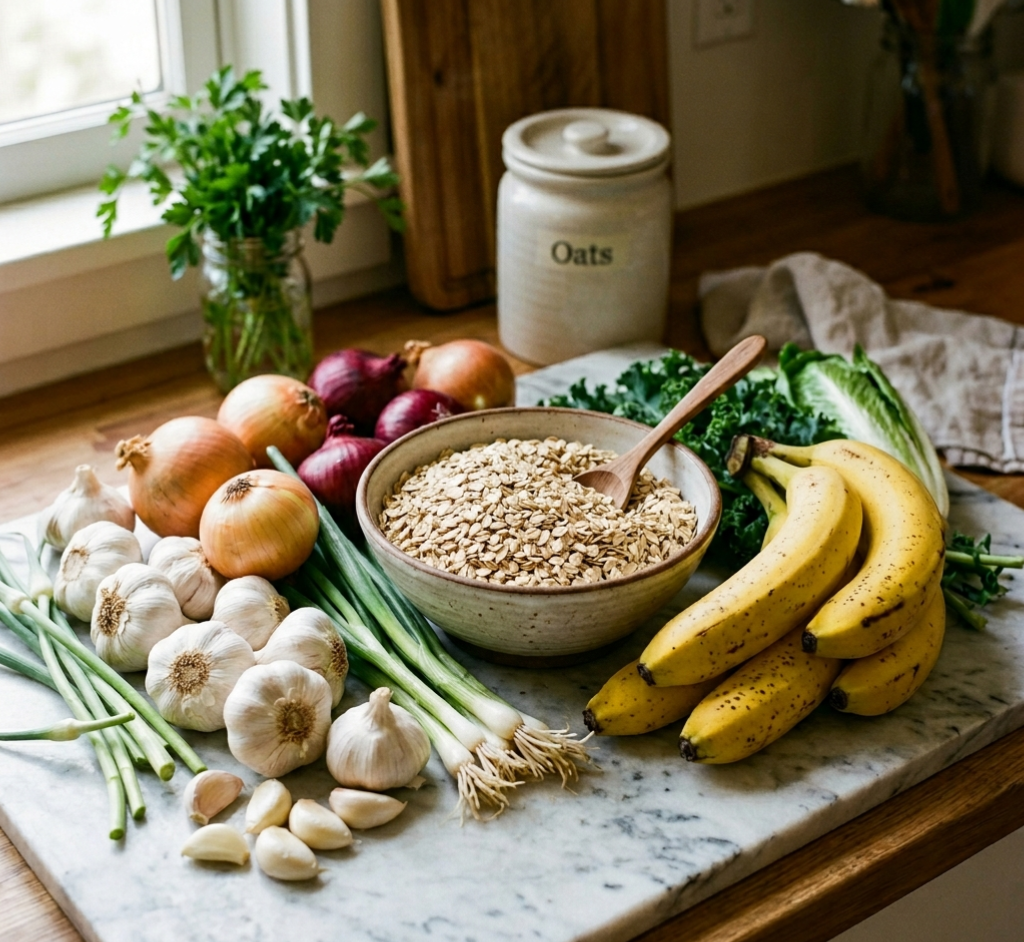
Garlic contains high amounts of inulin and FOS, making it one of the most potent prebiotics for gut health. Additionally, just half a small onion-sized amount of garlic or related allium vegetables can deliver approximately 5 grams of prebiotics. Raw garlic works beautifully in dressings, while roasted garlic adds depth to soups and sauces. Because cooking does not destroy all prebiotic benefits, you can enjoy garlic however you prefer.
2. Onions — Everyday Gut Fuel
Onions share the same allium family as garlic and leeks. Consequently, they are packed with multiple forms of prebiotic fibers. Research ranked onions among the top five foods richest in prebiotics, containing roughly 100–240 milligrams per gram. Sauté them into stir-fries, caramelize them for sweetness, or add raw slices to salads.
3. Leeks — The Gentle Prebiotic
Leeks contain abundant inulin fiber, just like their relatives garlic and onions. However, their milder flavor makes them perfect for soups and gentle sautés. Chop them finely and add to omelets, or roast them whole with olive oil for a tender, gut-friendly side dish.
4. Bananas — Nature’s Convenient Prebiotic
Bananas, especially slightly green ones, are rich in resistant starch. This special starch acts as a prebiotic by feeding beneficial bacteria in your colon. Furthermore, bananas provide potassium and other electrolytes that support overall health. Add them to smoothies, slice them over oatmeal, or freeze them for a creamy “nice cream” treat.
5. Oats — The Breakfast Microbiome Booster
Oats contain beta-glucan, a soluble fiber with proven prebiotic and anti-inflammatory properties. Additionally, research links beta-glucan to broader health benefits beyond gut support. Start your morning with steel-cut oats, overnight oats, or homemade granola to fuel your microbiome from dawn till dusk.
6. Asparagus — The Spring Prebiotic Star
Asparagus is loaded with inulin fiber, making it a standout among prebiotics for gut health. Moreover, it is rich in folate and other essential nutrients. Roast it, grill it, or steam it lightly to preserve those beneficial fibers. For extra gut support, pair asparagus with garlic and olive oil.
7. Apples — The Pectin Provider
Apples contain pectin, a soluble fiber that increases butyrate production in your gut. Because butyrate helps maintain a healthy weight and supports intestinal health, apples deserve a daily spot in your diet. Enjoy them whole, sliced with almond butter, or baked with cinnamon.
8. Flaxseeds — The Tiny Fiber Giants
Flaxseeds deliver prebiotic fibers along with phenolic antioxidants. Additionally, they encourage regular bowel movements while feeding friendly bacteria. Grind them fresh and sprinkle over yogurt, blend into smoothies, or use as an egg substitute in baking.
9. Chicory Root — The Coffee Alternative
Chicory root is exceptionally rich in inulin. In fact, you will often see it listed as “chicory root fiber” or “inulin” on ingredient labels. Brew roasted chicory as a coffee substitute, or look for products that include this powerful prebiotic additive.
10. Jerusalem Artichoke (Sunchokes) — The Top-Ranked Prebiotic
Scientists ranked Jerusalem artichoke among the top five foods richest in prebiotics. Furthermore, it contains approximately 100–240 milligrams of prebiotics per gram. Roast them like potatoes, blend into soups, or shave raw into salads for a crunchy, nutty flavor.
11. Dandelion Greens — The Wild Prebiotic
Dandelion greens scored highest in prebiotic content across the entire food database analyzed by researchers. However, their bitter taste can surprise newcomers. Therefore, balance them with sweet fruits, salty cheese, or a bright vinaigrette in salads. Alternatively, sauté them with garlic and olive oil.
12. Beans and Lentils — The Resistant Starch Champions
Beans, lentils, and chickpeas provide resistant starch and fermentable fiber. Consequently, your gut bacteria ferment these fibers into beneficial compounds right inside your colon. Add them to chili, blend into dips, or toss into salads for a satisfying, microbiome-friendly meal.
13. Cabbage — The Versatile Prebiotic
Cabbage delivers prebiotic fibers whether eaten raw, cooked, or fermented. While sauerkraut adds probiotics through fermentation, plain cabbage still feeds your existing good bacteria. Use it in slaws, wraps, or stir-fries for crunch and gut support.
14. Almonds — The Snackable Prebiotic
Almonds are high in fiber, fatty acids, and polyphenols that benefit gut bacteria. Additionally, a handful makes an excellent energy-boosting snack. Enjoy whole almonds, almond butter, or baked goods made with almond flour.
15. Honey — The Sweet Prebiotic Touch
Honey contains oligosaccharides that can act as prebiotics. However, moderation matters because honey is still a sugar source. Drizzle it over oatmeal, stir into herbal tea, or mix into salad dressings for a touch of natural sweetness with gut benefits.
How to Combine Prebiotics for Gut Health with Probiotics
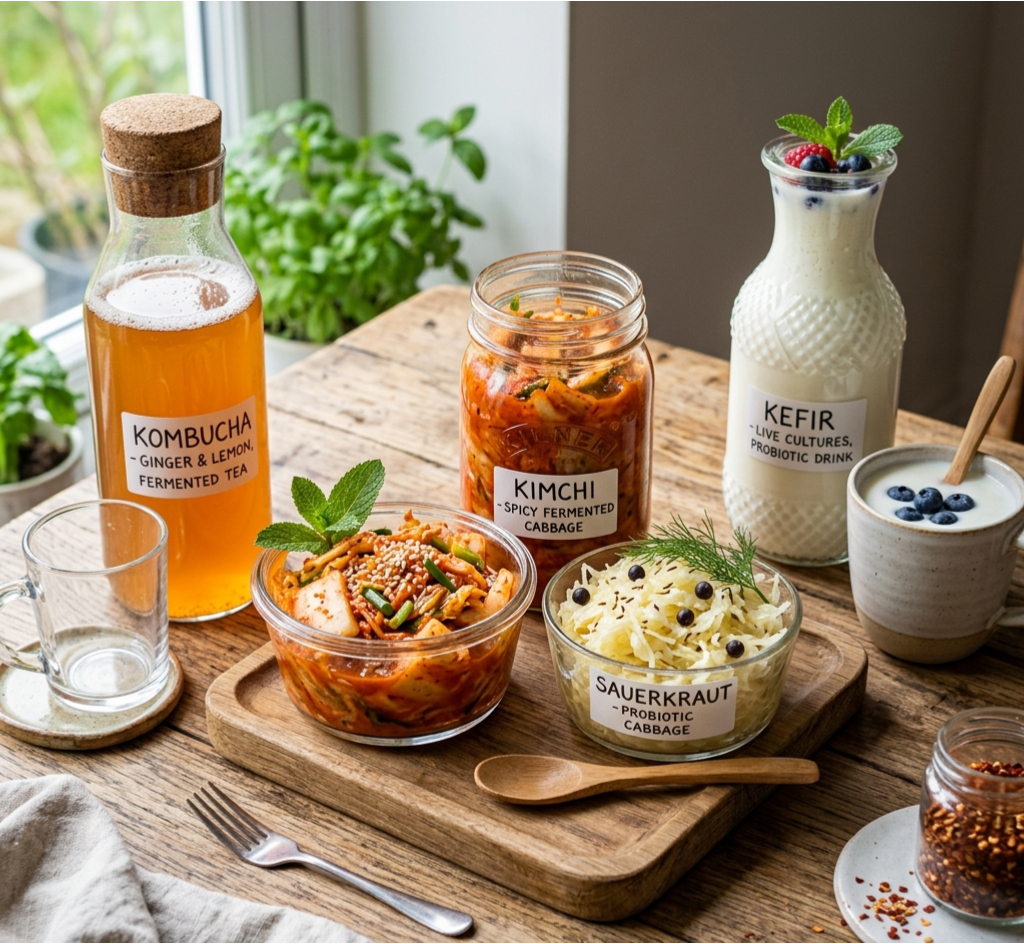
Prebiotics and probiotics work best together. While prebiotics feed your existing bacteria, probiotics add new beneficial strains. Therefore, pairing prebiotic foods with probiotic sources creates a synergistic effect.
For example, top your oatmeal (prebiotic) with yogurt (probiotic). Alternatively, add garlic and onions (prebiotics) to a miso soup base (probiotic). This combination, known as a synbiotic approach, maximizes your gut health benefits.
Mayo Clinic recommends familiarizing yourself with both food types so you can easily incorporate them into meals. As a result, your diet becomes a powerful tool for microbiome balance.
Simple Ways to Add More Prebiotics for Gut Health to Your Diet
Transitioning to a prebiotic-rich diet does not require a complete kitchen overhaul. Instead, small swaps make a big difference over time.
Start your morning with oatmeal topped with sliced bananas and flaxseeds. For lunch, add leeks and garlic to your soup or salad. At dinner, include asparagus or roasted Jerusalem artichokes as a side dish. Additionally, snack on almonds or apple slices with almond butter between meals.
Because variety matters for microbiome diversity, aim to include several different prebiotic sources throughout your week. Furthermore, gradually increase your fiber intake to avoid temporary bloating as your gut adjusts.
Prebiotics for Gut Health: What to Expect
When you consistently feed your gut prebiotic fibers, positive changes typically appear within a few weeks. Initially, you may notice improved regularity and less bloating. Over time, however, benefits extend to better energy levels, stronger immunity, and even improved mood. This happens because your gut and brain communicate through the gut-brain axis.
Healthline notes that prebiotic foods have also been shown to improve metabolic health and help prevent certain diseases. Therefore, prebiotics for gut health are not just about digestion—they support your entire body.
Frequently Asked Questions About Prebiotics for Gut Health
Do I need supplements if I eat prebiotic foods?
Not necessarily. Whole foods provide prebiotics in their natural form, often with additional nutrients. However, supplements can help if your diet lacks variety or if you have specific health goals.
Can I eat too many prebiotics?
Generally, whole food sources are safe. However, suddenly increasing fiber intake can cause temporary gas or bloating. Therefore, increase gradually and drink plenty of water.
Are cooked prebiotic foods still effective?
Yes. While some prebiotics may decrease slightly with cooking, many remain stable. For instance, cooked onions, garlic, and asparagus still deliver significant gut benefits.
Start with Your Kitchen for Better Gut Health
Prebiotics for gut health do not require special ordering or expensive products. Instead, your kitchen already holds powerful tools for nourishing your microbiome. From garlic and onions to oats and bananas, these 15 foods offer science-backed support for digestion, immunity, and overall wellness.
Therefore, pick one or two prebiotic-rich foods to add to your meals this week. Additionally, combine them with probiotic sources for maximum benefit. Because small, consistent changes create lasting health improvements, your gut will thank you for every prebiotic bite.
Sources Referenced
- Fortune — “The 6 Best Prebiotics of 2026: Tester Approved” (2026)
- Healthline — “The 19 Best Prebiotic Foods You Should Eat” (2023)
- Nutrition.org / NUTRITION 2023 — “Scientists name top five foods rich in prebiotics” (2023)
- Mayo Clinic Health System — “Gut health: prebiotics and probiotics” (2025)
https://www.mayoclinichealthsystem.org/hometown-health/speaking-of-health/good-bacteria-for-your-gut - CHOP (Children’s Hospital of Philadelphia) — “Food as Medicine: Prebiotic Foods”
- Dr. Will Cole — “The Best Prebiotic Foods For Your Gut Health” (2024)
https://drwillcole.com/prebiotic-foods-for-gut-health/ - America’s Best Care Plus — “Top Gut Health Foods to Add to Your Diet in 2026” (2026)
https://americasbestcareplus.com/top-gut-health-foods-add-diet-2026/ - Continental Hospitals — “How to Start 2026 With Strong Gut Health” (2026)
https://continentalhospitals.com/blog/how-to-start-2026-with-strong-gut-health/ - Emerson Health — “11 Foods for Gut Health and Recipes” (2025)
https://emersonhealth.org/11-foods-for-gut-health-and-recipes/ - GrowSpace Farm — “3 Best Foods for Your Gut Health” (2026)
https://growspace.farm/blogs/video-sources/3-best-foods-for-your-gut-health-short-1-19-2026
You May Also Like:
- Why Protein Matters in Everyday Meals to Cook
- Fermented Foods for Gut Health: A Complete Guide
- High Quality Probiotics: Best Strains for Gut Health
- Best Digestion Supplements for Bloating, Gas and Discomfort
- Best Prebiotics for Gut Health vs Probiotics
Ready to transform your gut health? Start by adding just one of these prebiotic-rich foods to your next meal. Your microbiome is waiting!